
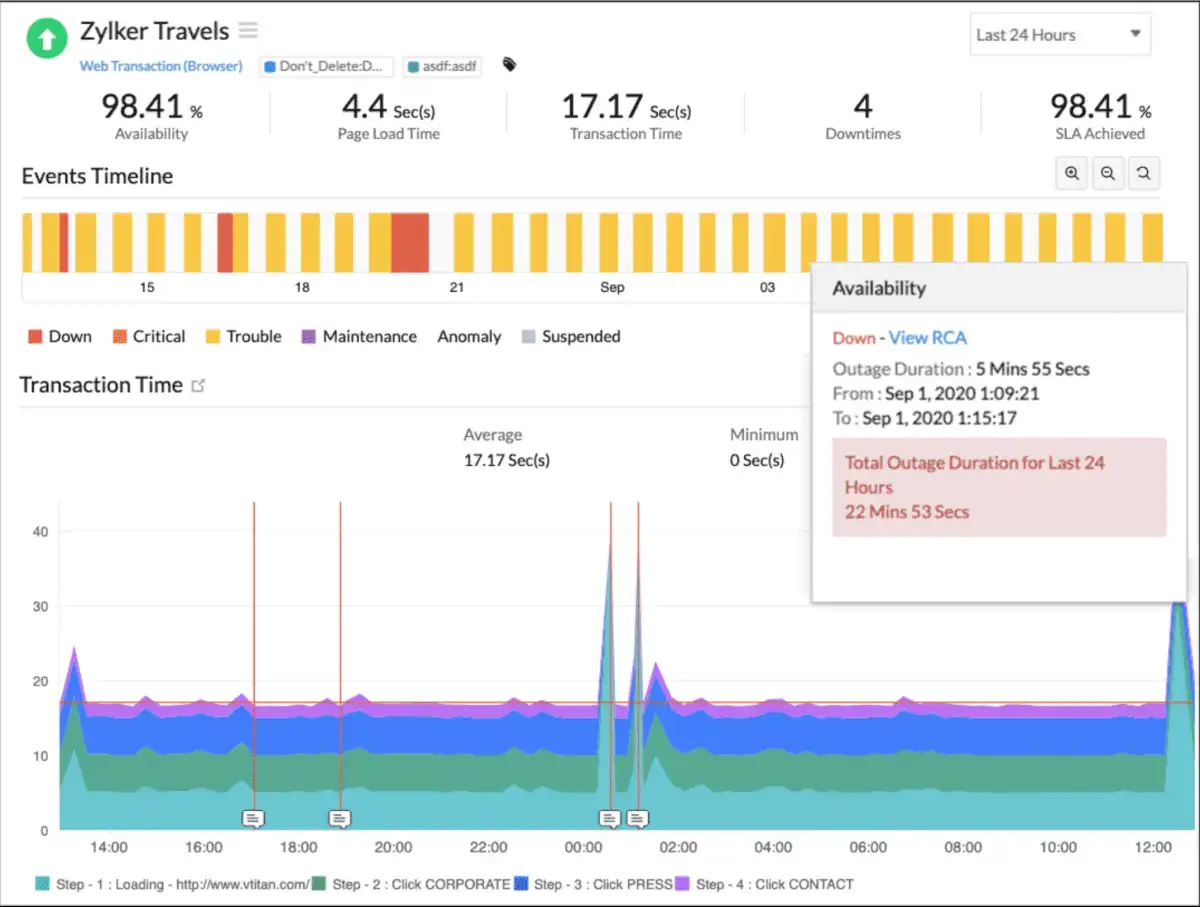
Website monitoring has evolved significantly since the 1990s, moving beyond simple online/offline checks to encompass complex system and content surveillance. This advanced monitoring is crucial for maintaining site performance, user experience, and business reputation in the adult industry.
The Evolution of Website Monitoring
In the 1990s, website monitoring primarily involved scanning a site to determine if it was operational. If a domain was offline, a server broke down, or a routing issue occurred, an alert would be sent. Today, websites are more intricate, making a basic "online" or "offline" alert insufficient. Modern monitoring aims to identify when individual systems break or go offline, not just the entire website.
Web hosts typically monitor for network outages, power outages, or other data center issues to keep servers operational. This monitoring is usually limited to hardware and network concerns directly related to the server. While some hosts offer custom content monitoring upon request, many do not.
For more granular control, website owners can implement their own monitoring systems. Simple content monitoring involves selecting specific, unchanging text on pages to be monitored. A scheduled script can then check for the presence of this text, sending alerts via email or SMS if it is missing. For complex architectures, a custom-built systems monitoring page can watch integrated parts of a website. This can include MySQL queries to confirm database responsiveness and data integrity, or checks for remaining hard drive space. Such a system can consolidate status results from multiple checks into a single alert if a problem is detected, helping to avoid false positives.
Beyond internal alerts, some companies make their monitoring pages or scan results publicly accessible. This practice offers transparency and accountability, informing the public of any issues and building customer trust and credibility. For teams, alerts can be programmed to notify specific members about problems within their area of expertise, with redundancy built in through fallback secondary recipients.
Beyond Basic Uptime: Comprehensive Monitoring Tools
Website monitoring is an ongoing process to ensure a site functions as expected and to identify when it isn't. Consistent monitoring is vital for a successful, high-performing website, helping teams pinpoint issues, find quick resolutions, minimize negative user experience (UX) impacts, and preserve brand reputation. Without appropriate tools, this process can be labor-intensive and time-consuming.
Several tools are available to enhance monitoring efficiency. UptimeRobot, for instance, is used by over 3.2 million users and offers 50 free monitors, 20+ integrations, real-time alerts, and public status pages. It monitors uptime, SSL certificates, ports, and cron jobs, providing instant alerts for issues. Specific monitoring capabilities include HTTP(s) endpoint or page monitoring, keyword monitoring for appearance or disappearance, ping monitoring for server or device availability, port monitoring for services like SMTP, POP3, and FTP, cron job monitoring for scheduled task failures, and DNS record monitoring for unauthorized changes.
Contentsquare is another platform that provides insights into user behavior, goals, and opinions. It combines quantitative performance data with qualitative user insights for comprehensive website monitoring. Its tools include Benchmarks for comparing web analytics like bounce rate and conversion rate to competitors, Speed Analysis for monitoring load speed across geographic locations and offering improvement suggestions, and Dashboards for creating custom tracking displays, such as website acquisition data.
Contentsquare also offers a website monitoring checklist to help teams safeguard their sites and catch damaging changes before they compromise reputation, frustrate users, or lead to lost sales. This checklist helps organize processes, prevent negative user experiences, enable quick reactions to unplanned downtime, and prioritize important metrics.
Proactive Improvement and User Experience
Poor user experience is a significant concern, with 67% of websites reportedly losing revenue due to it. Continuous monitoring is therefore essential for maintaining optimal website performance, identifying issues early, uncovering root causes, and implementing solutions before they affect users. Investing in the right website monitoring tool is crucial for staying ahead.
Website monitoring tracks how a website performs when users access it, ensuring it remains available, fast, and fully functional. Key aspects include user behavior monitoring, which uses tools like heatmaps, session recordings, surveys, and form analytics to understand user interactions and pain points. Synthetic transaction monitoring simulates user interactions across different browsers and locations to identify performance bottlenecks, frontend errors, and page load speed issues. Real user monitoring (RUM) tracks real-time performance for actual visitors, detecting JavaScript errors, AJAX issues, and frontend or backend problems. Webpage monitoring analyzes specific pages for slow load times, broken functionality, and other defects. Content monitoring scans for unauthorized modifications in HTML, injected links, iframes, scripts, and text.
Beyond reporting outages, content monitoring can be used for proactive website improvement. This includes adding time checks to track page loading speeds and optimizing code for faster performance. It can also scan for broken links, helping to fix errors and keep content or affiliate codes current. Brad Mitchell, founder of MojoHost, emphasizes that once monitoring and reporting are integrated, businesses often find a desire to add more, benefiting both the website and the business.
Key Facts
- Website monitoring has advanced from simple online/offline checks to complex system and content surveillance.
- UptimeRobot is trusted by over 3.2 million users and offers 50 free monitors, real-time alerts, and public status pages.
- Contentsquare provides an all-in-one experience intelligence platform with tools like Benchmarks, Speed Analysis, and Dashboards.
- 67% of websites lose revenue due to poor user experience, highlighting the importance of continuous monitoring.
- Monitoring can be used proactively to track page load times, scan for broken links, and improve overall website performance.
- Brad Mitchell, founder of MojoHost, advocates for comprehensive monitoring to benefit websites and businesses.