Senator Mike Lee of Utah has introduced federal legislation, the Preventing Rampant Online Technological Exploitation and Criminal Trafficking (PROTECT) Act of 2026 (S 5129), which proposes new federal rules for adult sites and platforms. The bill contains provisions that echo regulations enacted in North Carolina last year.
Federal Expansion of State-Level Requirements
The PROTECT Act of 2026, introduced on Thursday, July 24, 2026, includes provisions similar to those found in North Carolina's HB 805, a state bill enacted in 2025. HB 805 imposed requirements on adult sites concerning age verification, consent, and content removal. The new federal PROTECT Act aims to extend these requirements nationwide.
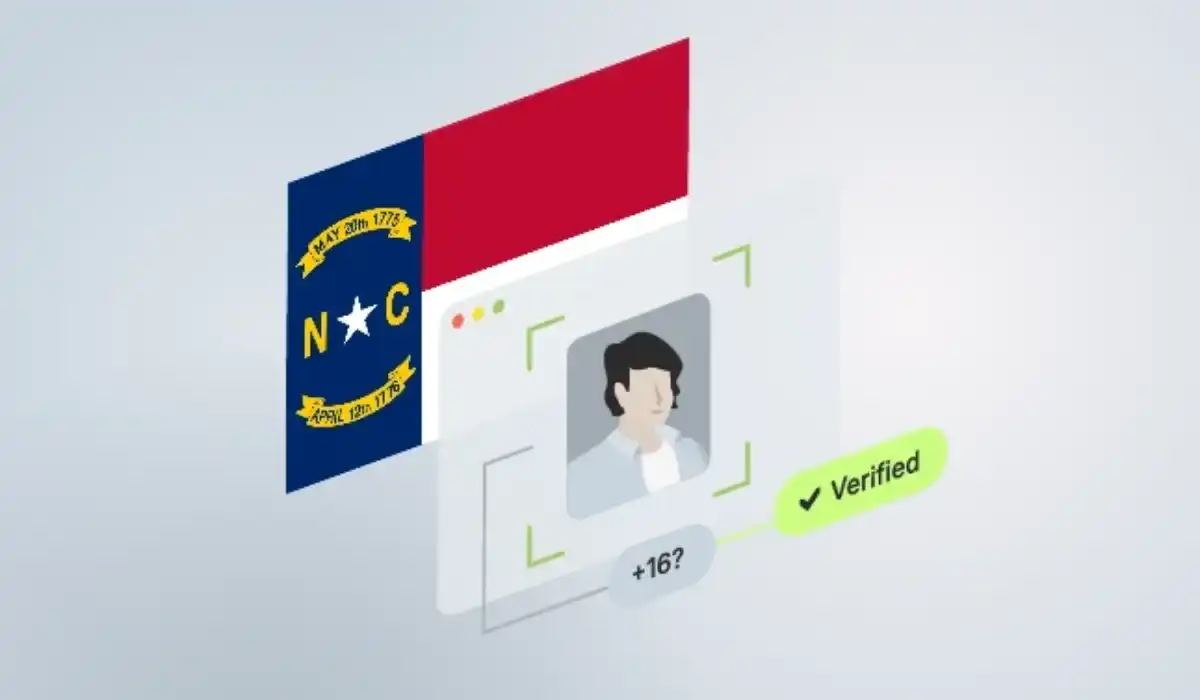
North Carolina's HB 805, which was ratified on July 29, 2025, after the General Assembly overrode Governor Josh Stein’s veto, had its adult entertainment industry provisions become effective on December 1, 2025. Another North Carolina law, the "Pornography Age Verification Enforcement Act" or PAVE Act (House Bill 534), which became effective January 1, 2024, requires commercial entities publishing or distributing "material harmful to minors" to verify a person's age as 18 or older using a commercial age verification system. This system must verify age using government-issued identification or public or private transactional data. The North Carolina age verification law, passed in 2025, took effect on January 1, 2026, and mandates commercially reasonable verification solutions, such as government-issued identification checks or third-party age and identity verification providers.
The federal PROTECT Act would require covered platforms to verify performers’ ages and consent through a process that exceeds federal record-keeping requirements under Section 2257. Section 2257, enacted to combat child sexual abuse material (CSAM), requires producers of sexually explicit content to maintain records of each performer’s name and age, verified by government ID.
The PROTECT Act mandates explicit written consent for each individual sexual act in which a performer engaged during content creation. It also requires separate and detailed consent for content distribution, specifying the geographic area, medium of distribution, and duration of consent. Producers, performers, and distributors would be required to use consent forms created or approved by the U.S. attorney general. Additionally, anyone appearing in adult content would be entitled to withdraw their consent at any time. Industry advocates and stakeholders noted that a similar provision in HB 805 effectively invalidated model contracts in North Carolina.
Scope and Potential Impact on Platforms
The bill defines “covered platforms” as websites or platforms that “primarily” provide a forum for user-generated content (UGC), or for which it is “in the regular course of trade or business” to provide adult content. Mike Stabile, Free Speech Coalition Director of Public Policy, noted that while the latter definition includes adult sites, the former could encompass tube sites and mainstream social media platforms.
Stabile stated that the biggest impact of the bill would likely be on social media platforms such as X, Reddit, Discord, Telegram, and forums like 4chan, as well as services like YouTube that allow for the distribution of non-explicit sexual material. He explained that these platforms would need to collect documentation for adult content. Stabile also highlighted that the bill’s definition of “pornographic image” includes any visual depiction of sexually explicit conduct “actual or feigned,” meaning platforms would also need to collect documentation for mainstream films and content, including "Game of Thrones," "Hunting Wives," Man Ray and Mapplethorpe photos, parody content, and documentary film.
Industry attorney Corey Silverstein expressed concern that Congress continues to respond to public safety concerns by placing burdensome obligations on platforms distributing lawful, constitutionally protected speech. Silverstein noted that the bill appears to assume platforms can verify the age, identity, and consent of every individual depicted in every uploaded work with complete certainty, which is complex for platforms hosting large volumes of user-generated content. He suggested that this could lead many platforms to refuse to host lawful content rather than risk civil or criminal liability, creating a chilling effect on free expression.
Silverstein compared the potential impact to FOSTA/SESTA, which revoked Section 230 liability protections for sites that "unlawfully promote and facilitate" prostitution or sex trafficking. He observed that FOSTA/SESTA primarily impacted lawful online speech while doing little to eliminate underlying criminal activity, and cautioned against repeating this mistake by imposing compliance obligations that affect legitimate businesses while bad actors move to offshore or anonymous platforms.
Industry attorney Lawrence Walters stated that the bill is openly hostile to adult content producers and distributors and triggers significant data privacy issues.
Penalties and Legislative Context
The proposed law would impose both civil and criminal penalties on violators. The U.S. attorney general would be empowered to levy fines of up to $10,000 per day per image found in violation. Private individuals would also be able to sue for damages of $10,000 or more. First-time violators could face up to five years in prison, fines, or both, while repeat violators could face at least two years and up to 10 years in prison, fines, or both.
Senator Lee’s office framed the bill as an effort to “shield children and other victims of sexual abuse from exploitation online.” Lee has previously introduced federal legislation that would redefine almost all visual depictions of sex as obscene. This goal was also outlined in the Heritage Foundation's Project 2025 policy blueprint.
Key Facts
- Senator Mike Lee introduced the PROTECT Act of 2026 (S 5129) on Thursday, July 24, 2026.
- The bill proposes federal rules for adult sites, mirroring North Carolina's HB 805, enacted in 2025.
- The PROTECT Act requires explicit written consent for each sexual act and detailed consent for distribution, exceeding Section 2257 requirements.
- Covered platforms include those primarily providing user-generated content or regularly providing adult content, potentially impacting mainstream social media.
- Violators could face civil fines of up to $10,000 per day per image and criminal penalties ranging from five to ten years in prison.
- Industry experts warn of potential chilling effects on lawful speech and significant data privacy issues.