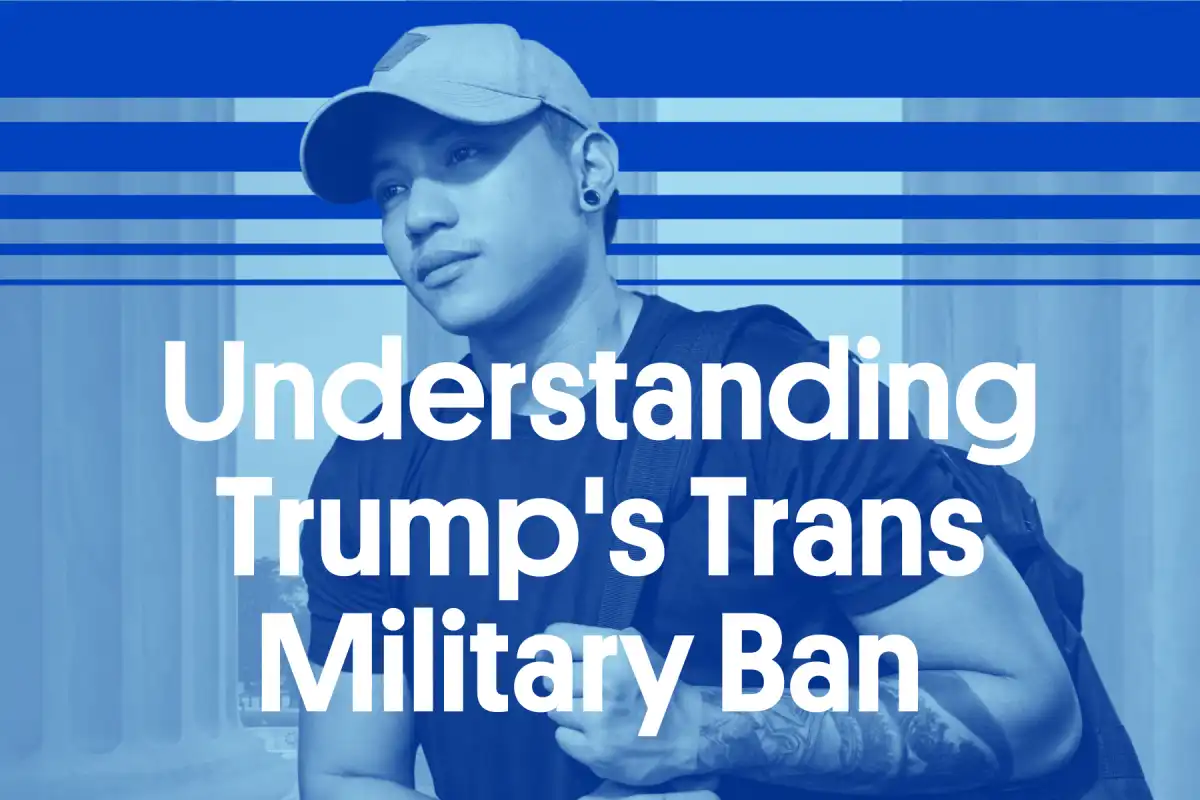
President Donald Trump announced on Wednesday morning that the U.S. military would not accept or allow transgender service members, stating that the military would not permit transgender people to serve in any capacity. This decision, communicated through a series of tweets, cited concerns over medical costs and potential disruption.
Policy Implementation and Rationale
On July 26, 2017, then-President Donald Trump announced via Twitter that transgender individuals would no longer be allowed to serve in the U.S. military. Trump stated that the United States Government would not accept or allow transgender individuals to serve, claiming he was advised by "my Generals and military experts." However, news reports indicated that the Pentagon was "caught off guard" by the tweets and was unprepared for the policy change, suggesting the move was not recommended by military leaders.
Emails uncovered by American Oversight in September 2018 showed that senior Pentagon leaders were unaware of the president’s announcement before it happened. One top military official stated that "everyone was caught flat-footed." American Oversight filed a lawsuit to uncover facts surrounding the administration’s move to ban transgender individuals from serving.
On January 27, President Trump signed Executive Order 14183, titled “Prioritizing Military Excellence and Readiness.” This order directed the Department of Defense (DoD) to adopt policies prohibiting transgender, nonbinary, and gender-nonconforming people from serving in the military. The order also claimed that transgender people are incapable of meeting the military’s accession requirements and lack the “selflessness and humility” required for military service.
In response to the executive order, Secretary of Defense Pete Hegseth issued a memo on February 7, immediately pausing all gender-affirming medical procedures for service members. On February 26, the DoD further detailed the implementation. The memo, filed at the US District Court in Washington, DC, on Monday, stated, “Effective immediately, all new accessions for individuals with a history of gender dysphoria are paused.” It also specified, “All unscheduled, scheduled, or planned medical procedures associated with affirming or facilitating a gender transition for Service members are paused.”
The Trump administration framed the restriction of transgender rights in the military as a necessary step in ensuring “military readiness.” It also criticized what it termed the promotion of “radical gender ideology” within the armed forces, as part of a larger campaign against diversity initiatives.
Impact on Service Members and Legal Challenges
Thousands of transgender people are currently serving honorably in the military and have done so for years. The executive order left tens of thousands of active-duty service members, veterans, and members of military families in fear and uncertainty about their jobs, their healthcare, and their future. Critics argue that the memo and related measures aim to erase transgender identity, perpetuate discrimination, and force transgender service members to live in secrecy and fear.
After four separate courts blocked the Trump administration’s ban on transgender people serving in the military, the White House announced a new plan to carry out the ban on March 23. Josh Block, Senior Counsel for the ACLU LGBT & HIV Project, stated that this was not a new policy but rather the military following through on Trump’s order from the previous year to ban transgender people from serving. Chase Strangio, Co-Director of the ACLU LGBTQ & HIV Rights Project, affirmed that it was the military's implementation of Trump's order, describing it as a wholesale ban on trans people serving, just as Trump initially requested.
An exception to the policy was made for individuals already in the military. On January 22, 2019, the Supreme Court lifted blocks on the trans military ban that were secured by two lawsuits while federal courts continued their review. The case, Stone v. Trump, continued to move forward at district court in Maryland.
Key Facts
- President Trump announced the ban on transgender military service via Twitter on July 26, 2017.
- Executive Order 14183, titled “Prioritizing Military Excellence and Readiness,” was signed on January 27, directing the DoD to prohibit transgender, nonbinary, and gender-nonconforming people from serving.
- Secretary of Defense Pete Hegseth issued a memo on February 7, immediately pausing all gender-affirming medical procedures for service members.
- The policy prohibits new accessions for individuals with a history of gender dysphoria and pauses all medical procedures for gender transition.
- Thousands of transgender individuals were already serving in the military when the ban was announced.
- American Oversight filed a lawsuit to investigate the facts surrounding the ban, uncovering emails indicating Pentagon leaders were unaware of Trump's announcement beforehand.