
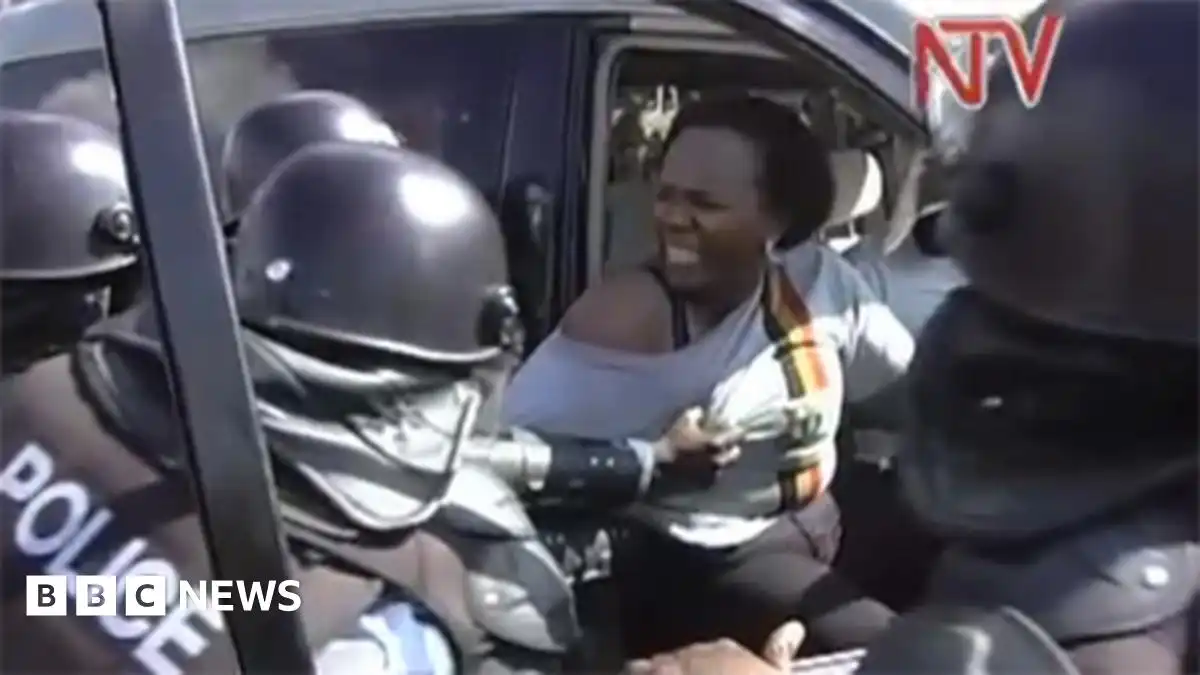
Seven women were arrested in Kakamega, Uganda, this weekend on suspicion of producing adult content. Authorities confiscated electronic devices and other materials from an apartment during the operation.
Police Operation and Confiscated Materials
Agents from the Directorate of Criminal Investigation (DCI) conducted a raid on an apartment in Kakamega, Uganda. During the raid, DCI agents arrested seven women suspected of producing adult content. The local Standard Media reported that "alleged pornographic materials and electronic devices" were confiscated. These items included laptops, desktops, sex toys, and "cameras perceived to be used in shooting pornographic content."
Kakamega County Police Commander Joseph Kigen stated that the suspects are currently in custody pending further investigations. Kigen also confirmed that the recovered devices have been forwarded for forensic analysis. The purpose of this analysis is to establish whether the materials were being used for shooting pornographic content. Kigen added that authorities are awaiting results from the laboratory analysis of the impounded devices to continue investigations into the incident's motive and extent.
Kigen addressed claims that the seven arrested women were students from local colleges. He explained that institutions sent representatives to identify the suspects, and it was determined that they are not students.
Context of Anti-Pornography Measures in Uganda
Uganda has an extreme prohibition against producing, distributing, or watching adult content. This policy is a result of a campaign in the 2010s, which was fueled by U.S. evangelical activists, including International House of Prayer (IHOP) and Exodus Cry. The Ugandan government, similar to some U.S. religious conservatives, maintains a zero-tolerance policy for adult material and sex work.
In 2017, Reuters reported that President Yoweri Museveni, who assumed power in 1986, was utilizing a campaign against online pornography as a diversion from issues such as graft, unemployment, and deteriorating social services. Reuters characterized this campaign as part of a "culture war between conservatives fighting what they see as foreign moral influences promoting criminality and a more liberal, often younger population."
Simon Lokodo, Museveni’s Minister of Ethics and Integrity and a Catholic priest, described adult content as "an invasion — it’s Western culture." Lokodo told Reuters that "over consumption of pornography — the consequences are very dire." The government allocated half a million dollars to Lokodo’s ministry to combat online pornography and fund pornography-blocking software. A year later, the Ugandan government claimed to possess a device capable of scanning citizens’ devices for access to adult content.
Broader Enforcement and Related Arrests
The arrest of the seven women in Kakamega follows other incidents related to Uganda's strict stance on morality and sexuality. Last April, Ugandan police arrested LGBTQ+ activists, alleging they were "porn actors." These arrests occurred days after Museveni referred to gay people as "deviants" and called for an investigation into homosexuality.
Uganda criminalizes consensual same-sex relations under its British colonial-era Penal Code Act. Over the last decade, the Ugandan government has increased restrictions on the rights of lesbian, gay, bisexual, and transgender (LGBT) people, culminating in the 2023 Anti-Homosexuality Act. This Act imposes penalties of up to life imprisonment for consensual same-sex conduct, up to 10 years for attempted homosexual acts, and the death penalty for "aggravated homosexuality," which includes repeated same-sex acts or intercourse with a person older than 75 or a person with a disability.
In February, two women were arrested in Uganda for allegedly kissing in public. A police spokesperson stated they were arrested under suspicion of "practicing homosexuality" after community members reported them for "queer and unusual acts." They were held in police custody, briefly released, and then re-arrested. While the Anti-Homosexuality Act initially included an obligation to report suspected same-sex acts, this provision was struck down by the Supreme Court in 2024.
LGBT activists in Uganda have reported an increase in physical attacks, violence, extortion, entrapment, and arbitrary arrest and detention since the Anti-Homosexuality Act was enacted. Andrew Karamagi, a rights activist and lawyer in Kampala, told Reuters in 2017 that the Museveni regime "does not have the moral authority to combat pornography" because "they are themselves an obscenity."
Key Facts
- Seven women were arrested in Kakamega, Uganda, on suspicion of producing adult content.
- DCI agents confiscated laptops, desktops, sex toys, and cameras during a raid.
- Kakamega County Police Commander Joseph Kigen stated the devices are undergoing forensic analysis.
- Uganda's anti-pornography policies are linked to campaigns by U.S. evangelical activists.
- President Yoweri Museveni's government has used anti-pornography campaigns as a diversion from other issues.
- Uganda's Anti-Homosexuality Act criminalizes consensual same-sex relations with severe penalties.