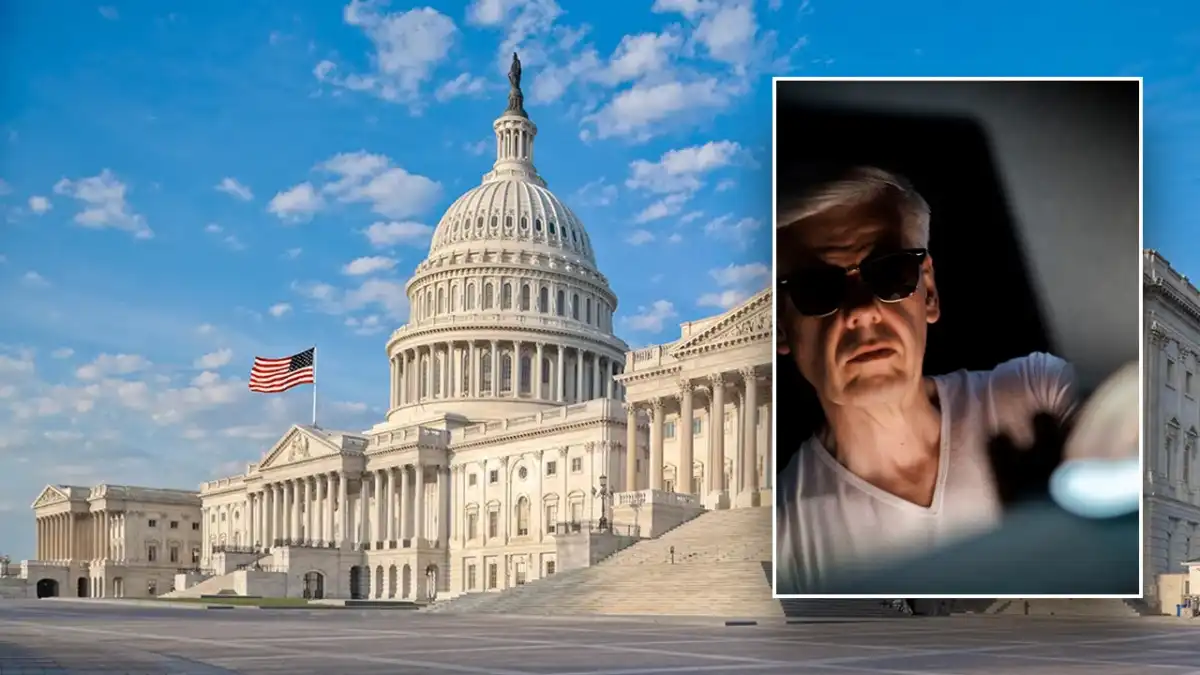
A Utah Republican legislator is advocating for a return to a pre-1973 standard for defining "profanity" and obscenity, challenging the established legal framework for protected speech. This move follows the recent enactment of a bill he authored, which restricts "x-rated and indecent books" in public schools.
Legislative Push to Redefine Obscenity
Utah Rep. Ken Ivory (R-West Jordan) has called for a reversal of the past 50 years of legal and judicial practice, specifically rejecting the "Miller test." The Miller test, established in the 1973 case Miller v. California, sets three conditions for determining obscenity: (i) whether "the ordinary person, applying contemporary community standards" would find that the work, taken as a whole, appeals to the prurient interest; (ii) whether the work depicts or describes, in a patently offensive way, sexual conduct or excretory functions specifically defined by relevant state law; and (iii) whether the work, taken as a whole, lacks serious literary, artistic, political, or scientific value.
Ivory has asserted that the Miller test is merely the opinion of a few Supreme Court justices at the time, not a binding legal standard. He specifically challenged the "taken as a whole" principle within the Miller test. According to a report by KSL NewsRadio, prior to a meeting of the Education Interim Board on Wednesday, Ivory was asked if he agreed with the last half-century of jurisprudence that works should be "taken as a whole" when determining First Amendment protection. Ivory responded, "Three courts of nine on the Supreme Court said that. It's not the law. It's not a holding of the Supreme Court and yet we act as if it is."
Ivory previously authored HB 374, a bill prohibiting "x-rated and indecent books" in Utah's public schools, which was signed into law in March. He was at the Capitol demanding that the Utah State Board of Education (USBE) tighten enforcement of HB 374, stating, "There are books having graphic material that have been allowed to remain" after an initial cleanup. USBE sought clarification on interpreting the law, leading the legislature's managing partner general counsel, Michael Curtis, to indicate that school districts are being compelled to choose between being sued for "breaking a right to access to free speech by removing a book" or for "violating a clear state law banning a product."
Utah law, as reported by KSL NewsRadio, "further defines what is harmful to minors along with pornography. Both of those definitions say a book has to be handled on the whole and assessed for its literary value." However, Ivory and other supporters of censorship aim to invoke Utah's indecency law, under which "if a depiction or description (of a book) violates any one of three standards within that definition, the book can be drawn without taking it overall." They refer to the indecency law's language as "a bright line policy for when a book can be pulled."
"Bright Line" Standards and Broader Efforts
According to Utah state law, this "bright line" is whether a book portrays or describes the following: "Human genitals in a state of sexual stimulation or arousal. Acts of human masturbation, sexual intercourse, or sodomy. Fondling or other sensual touching of human genitals or pubic area. Fondling or other sensual touching of the human butt or female breast that, when taken as a whole, has no serious literary, artistic, political, or scientific value for minors, considering ages of all minors who can be exposed to the material."
The Utah version of the Miller test, specifically applied to minors, considers whether a work "(i) Taken as a whole, appeals to the prurient interest in sex of minors; (ii) is patently offensive to prevailing standards in the adult community as a whole with respect to what is appropriate material for minors; and (iii) taken as a whole, does not have serious value for minors." After the Education Interim Committee meeting, Ivory issued a statement contending that a guidance memo from the state chief law officer supported his opinion of a "bright line" rule.
This local effort in Utah aligns with broader national initiatives. Sen. Mike Lee, R-Utah, and Rep. Mary Miller, R-Ill., introduced the Interstate Obscenity Definition Act (IODA), which, if passed, would criminalize the transmission of obscene content across state lines and facilitate prosecution. Lee stated that "Obscenity isn’t protected by the First Amendment, but hazy and unenforceable legal definitions have allowed extreme pornography to saturate American society and reach countless children." He added that the IODA "updates the legal definition of obscenity for the internet age so this content can be taken down and its peddlers prosecuted." The IODA aims to clarify the definition of obscenity in all states and provides updated descriptions for modern content, removing the current law’s reliance on public opinion and replacing it with practical standards for identifying obscenity.
Historical Context of Anti-Pornography Laws in Utah
Utah has a history of addressing obscenity and pornography. In February 2001, the state's Republican-dominated Legislature established what was believed to be the first "porn-czar" in the United States. Paula Houston accepted the position, officially titled Obscenity and Pornography Complaints Ombudsman, and worked to classify pornographic or obscene material for two years. In March 2005, former Governor Jon Huntsman Jr. signed House Bill 260, sponsored by Republican Rep. John Dougall, which mandated the state Attorney General's Office to list "harmful" online websites and required Internet service providers to block those websites at each individual connection. In August 2012, Ogden city leaders considered an ordinance to address profanity in city parks, citing concerns about verbal altercations escalating to physical incidents.
Key Facts
- Utah Rep. Ken Ivory advocates for a return to pre-1973 standards for defining "profanity" and obscenity.
- Ivory challenges the "Miller test," specifically the "taken as a whole" principle for determining obscenity.
- HB 374, authored by Ivory, prohibits "x-rated and indecent books" in Utah public schools and was signed into law in March.
- Utah's indecency law provides a "bright line" for removing books based on specific depictions, without requiring the work to be "taken as a whole."
- Sen. Mike Lee and Rep. Mary Miller introduced the Interstate Obscenity Definition Act (IODA) to criminalize interstate transmission of obscene content and clarify its definition.
- Utah has a history of anti-pornography measures, including a "porn-czar" position in 2001 and legislation to block "harmful" online websites in 2005.