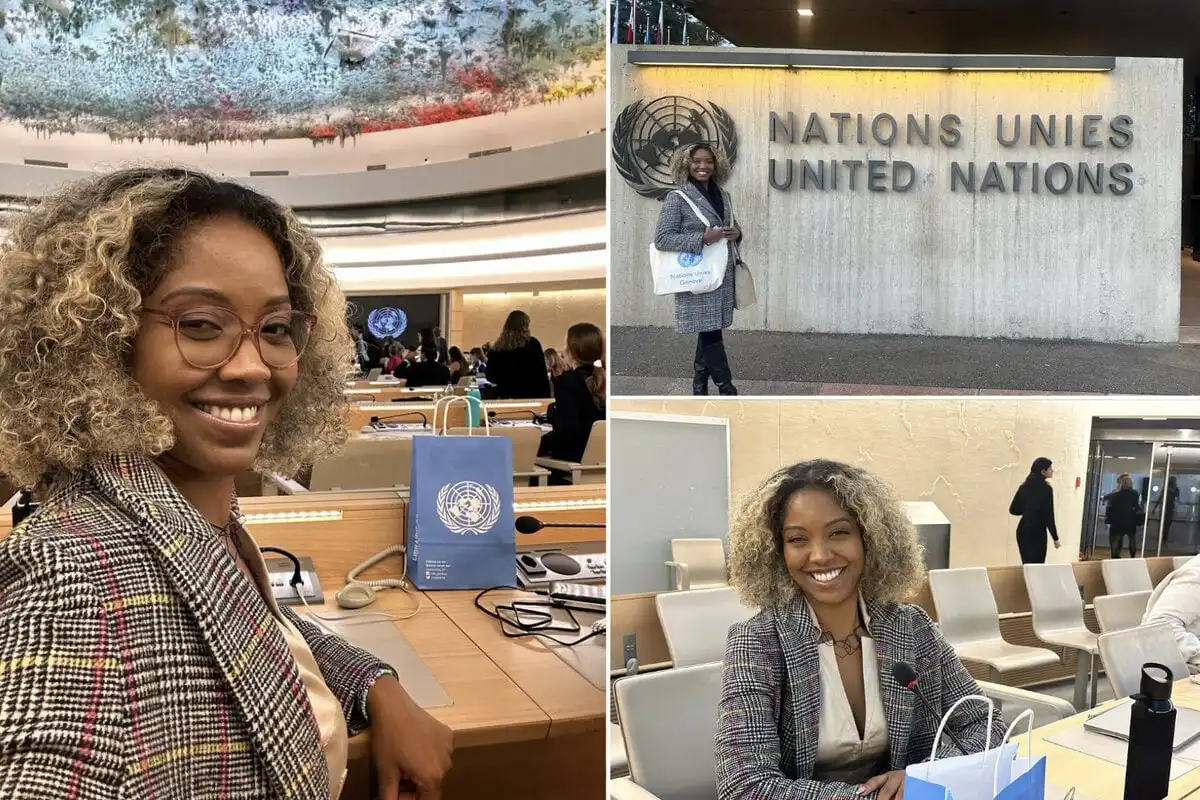
Lotus Lain, an Industry Relations Advocate for the Free Speech Coalition (FSC) and a founding member of Decrim Sex Work CA, recently traveled to Geneva, Switzerland, to advocate for sex worker rights before the United Nations Human Rights Committee. Lain penned an essay detailing her experiences, which is available on the Free Speech Coalition website.
Advocacy at the UN Human Rights Committee
Lain's objective in Geneva was to offer testimony as a person with "lived experience" in sex work. Her aim was to petition the UN Human Rights Committee to pressure the U.S. State Department to implement improved policies to prevent sex trafficking in the U.S. and to end discrimination against sex workers. Lain was invited to address the committee alongside Lorelei Lee, a Cornell Law professor and former adult industry colleague. The 139th session of the UN Human Rights Committee monitors state parties' implementation of the International Covenant on Civil and Political Rights (ICCPR), which meets every nine years.
Lain's message to the committee focused on the U.S.'s approach to sex work and sex trafficking. She argued that incarcerating sex workers and sex trafficking survivors on prostitution charges does not facilitate their ability to lead a "normal life." Instead, it results in criminal records that create obstacles to opening bank accounts, accessing housing, and securing other employment, thereby increasing vulnerability to further trafficking. Lain stated that the current methods of prosecuting these crimes criminalize victims rather than providing support.
Engagements with the U.S. State Department
On October 16, Lain participated in an ICCPR Civil Society Consultation and Reception with the U.S. State Department, held at a U.S. State Department building. During this event, representatives from various advocacy groups presented their concerns to U.S. State Department representatives. Each speaker was allotted two minutes to present their points. State Department representatives then offered rebuttals or responses, often detailing existing policies and actions. Lain observed that most responses were "canned" and that representatives appeared to prolong their answers, limiting the participation of those waiting to speak.
Lorelei Lee spoke at the event after 5 PM. Lee's statement addressed how U.S. policies intended to combat trafficking can inadvertently increase vulnerability to trafficking and entrap sex workers. Lee argued that these policies cause harm, potentially leading to death, incarceration, loss of housing, and loss of income for individuals in these communities. Lee spoke for 3.5 minutes without interruption and received applause. Jessica Marcella from Population Affairs, a U.S. State Department representative, was noted by Lain for speaking about sex work and sex workers in her final statements.
Challenges and Informal Discussions
The day after the consultation, Lain was scheduled to speak to the UN Special Procedures staff. Her planned presentation focused on how financial and housing discrimination contributes to sex workers' vulnerability to trafficking. She intended to ask the UN Committee to hold the U.S. State Department accountable for creating these obstacles. However, the staff members concluded their session and departed before Lain could deliver her presentation due to time constraints. Lain expressed frustration regarding the staff's decision to prioritize another meeting over hearing the remaining speakers, who had traveled internationally to be heard.
Lain also reflected on the broader implications of this experience, noting a perceived lack of solidarity within the ACLU Civil Society Task Force Group. She highlighted the group's initial commitment to mutual support and the equal importance of each member's issues, contrasting this with the outcome of the session. Lain emphasized that issues concerning Guantanamo Bay Detainees should not be considered more important than those related to trafficking, housing, and banking discrimination faced by sex workers and trafficking survivors, aligning with the premise of the Human Rights Committee that each human life and issue holds equal importance.
Despite the formal session's challenges, Lain and her colleagues engaged in informal face-to-face conversations with committee members on the subsequent day. Lain described these conversations as the most impactful part of her trip, allowing her to identify and interact with individuals already supportive of sex worker rights and to explore collaborative strategies for global change.
Key Facts
- Lotus Lain, FSC Industry Relations Advocate and Decrim Sex Work CA founding member, advocated for sex worker rights in Geneva, Switzerland.
- Lain addressed the United Nations Human Rights Committee and participated in a consultation with the U.S. State Department.
- Her advocacy focused on pressuring the U.S. State Department to improve policies to prevent sex trafficking and end discrimination against sex workers.
- Lorelei Lee, a Cornell Law professor, also presented testimony on the negative impacts of U.S. anti-trafficking policies on sex workers.
- Lain's scheduled presentation to UN Special Procedures staff was canceled due to time constraints.
- Informal conversations with committee members were described by Lain as the most impactful part of her trip.