
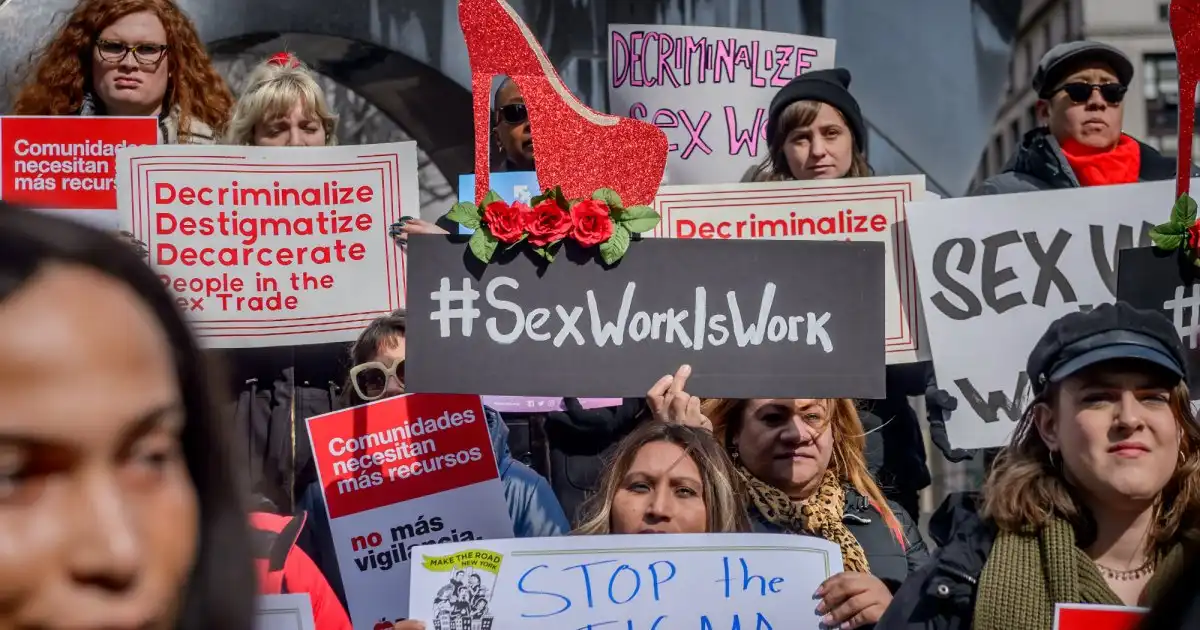
Congressional candidate Joe Cohn is engaging with the adult community, advocating for an inclusive approach to civil liberties that extends to all sex workers and businesses. Cohn, a civil rights attorney, is running in a New Jersey Democratic primary for a U.S. House of Representatives seat.
Cohn's Campaign and Industry Engagement
Joe Cohn has scheduled a virtual discussion, hosted by Free Speech Coalition (FSC) and open to all members of the adult industry, for Thursday at 4 p.m. PDT. Cohn stated his interest in these issues stems from his passion for workers' rights and his belief that free speech applies universally. He emphasized that his focus is on the civil liberties and workers' rights aspects, asserting that sex workers are part of the "everyone" deserving of protections.
Cohn is a civil rights lawyer with a background in free speech issues. His stepdad, Allen Lichtenstein, was a First Amendment lawyer who represented parts of the adult industry. For 12 years, Cohn worked at the Foundation for Individual Rights and Expression (FIRE), where he led campaigns against bills that he described as unconstitutionally regulating the internet. He oversaw FIRE’s campaign against a Louisiana bill in 2022 that would have required a firewall prohibiting university students from accessing adult websites on campus.
Alison Boden, FSC Executive Director, met Cohn in 2022 when FSC was considering its first legal challenge to a state age verification law. Boden stated that Cohn, then a lawyer at FIRE, shared First Amendment knowledge and advice that assisted FSC in approaching lawsuits. Boden expressed FSC's support for Cohn, noting that this is the first time the adult entertainment and sexual wellness industries have the opportunity for an ally in Congress.
Cohn is one of three main contenders in the New Jersey 3rd district Democratic primary, which is a five-way race. His opponents include New Jersey Assembly members Herb Conaway and Carol Murphy. The incumbent, U.S. Rep. Andy Kim, is not seeking re-election.
Policy Positions and Civil Liberties
Cohn's campaign theme centers on defending democracy and cutting through polarization to address national problems. He stated this involves defending voting rights access, freedom of the press, and civil liberties for all. He clarified that his outreach to the adult community is not to be "the adult industry's congressman," but "the Civil Rights congressman," asserting that people in the adult industry deserve the same civil rights as anyone, despite facing unique threats.
Cohn identified several industry concerns he plans to address if elected. These include protecting the industry from internet regulations and age verification bills that he believes violate free speech rights. He also aims to address access to banking and fair access to financial services, which he stated jeopardize livelihoods due to the banking industry's views on sexuality. Cohn also stated the need to decriminalize sex work to move it out of the shadows and curb exploitation and violence.
Regarding internet regulation, Cohn noted that both sides of the political spectrum have reasons for engaging in censorship. He cited Assemblyman Herb Conaway as the sponsor of New Jersey's age verification bill. He also mentioned Assemblywoman Carol Murphy, who he said publicly agreed with him that an age verification bill was unconstitutional and could prevent LGBT youth from accessing essential online information. However, Cohn stated that Murphy later advocated for regulating and removing "bad content" online, which Cohn described as state censorship.
Cohn believes that if internet regulation occurs, it needs to be precise. He stated that he differs from some civil libertarians by believing in safeguards to ensure social media access, expressing discomfort with social media companies having the power to remove candidates or control message dissemination. He stated that the Supreme Court has only identified obscenity and child pornography as types of sexual expression not protected by the First Amendment, with a vast majority of adult expression being protected. He emphasized the importance of elected officials resisting urges to regulate expression that makes them uncomfortable, noting that millions consume sexual expression.
On banking discrimination, Cohn stated that financial institutions should not withhold services from people unless justified by an inability to meet impartial financial risk-based standards. He stated that this issue affects individuals from erotic dancers to owners of businesses selling novelty sex toys. He believes states and Congress should act to prevent banks from using prejudice against sexuality to deny access to financial services.
Cohn reiterated that his interest in these issues is due to their profound civil liberties and workers' rights implications, not solely their sexual aspects. He stated his career has been dedicated to defending the civil liberties and rights of all people, including those in the adult industry, without making carve-outs.
Historical Context of Sex Worker Advocacy
The issue of sex worker rights has gained attention in political campaigns. In 2018, Julia Salazar, a Democratic Socialist candidate for the New York state Senate, consulted the sex work community to shape her policy, proposing steps toward decriminalization. Salazar's campaign, which centered on affordable housing and other policies, also prioritized the rights, health, and safety of sex workers. Hundreds of sex workers and advocates canvassed for Salazar in her primary election, where she unseated incumbent state Sen. Martin Malave Dilan. Jessica Raven, a sex worker rights advocate, provided advice for these canvassing efforts.
In 2019, Reps. Ro Khanna (CA-17), Barbara Lee (CA-13), and Senators Elizabeth Warren (D-MA) and Ron Wyden (D-OR) introduced the SAFE SEX Workers Study Act. This bill would require the Department of Health and Human Services (HHS) to conduct the first federal study on the health and safety of sex workers. The study would analyze the impacts of SESTA/FOSTA (Stop Enabling Sex Traffickers Act/Allow States and Victims to Fight Online Sex Trafficking Act), which holds websites liable for knowingly facilitating sex trafficking but also affects online platforms where consensual sex work is discussed. Anecdotal reports suggest SESTA/FOSTA and the loss of online services have impacted sex workers. The 2015 United States Transgender Survey by the National Center for Transgender Equality reported that 19% of respondents had exchanged sex for resources, with higher percentages among transgender women of color.
Key Facts
- Joe Cohn is a civil rights attorney running in a New Jersey Democratic primary for a U.S. House of Representatives seat.
- Cohn has scheduled a virtual discussion hosted by Free Speech Coalition (FSC) for adult industry members on Thursday at 4 p.m. PDT.
- FSC Executive Director Alison Boden met Cohn in 2022 when he was a lawyer at the Foundation for Individual Rights and Expression (FIRE).
- Cohn's campaign focuses on defending democracy, voting rights, freedom of the press, and civil liberties for all, including sex workers.
- He advocates for decriminalizing sex work and addressing banking discrimination against adult businesses and sex workers.
- Cohn is one of three main contenders in the New Jersey 3rd district Democratic primary, alongside Assembly members Herb Conaway and Carol Murphy.