
United States interests in the Middle East have been increasingly affected by regional events and politics not subject to U.S. control since 1973, according to a December 1979 Interagency Intelligence Memorandum prepared in the Central Intelligence Agency. The memorandum, titled "New Realities in the Middle East," noted a heavy U.S. dependence on oil from the region.
Shifting Dynamics in the Middle East
The 1979 intelligence memorandum highlighted a decline in U.S. influence in the Middle East, with manifestations of anti-American sentiment increasing. This trend was attributed in part to the perception of the United States as irresolute, but fundamentally to a historical trajectory unlikely to be reversed. U.S. relations with Israel, Arab states, and some South Asian states experienced repeated strains as these nations pursued their national interests independently of major global powers.
Dramatic developments during the 1970s were identified as the primary drivers of these changed circumstances. These included the 1973 Arab-Israeli war, a rapid increase in oil prices, the revolution in Iran, the resurgence of a politicized Islam, a rejection of Western culture, and the Egyptian-Israeli peace treaty. These events collectively reoriented the politics, economics, and to a lesser extent, the military balance of the region.
The memorandum observed that Egypt had become isolated within the Arab world, while Iran was militarily weak and approaching anarchy. Pro-U.S. Arab states, often referred to as moderates, were taking a more independent course. These states were seeking new allies within the region and cooperating more frequently with radical, anti-Western Arab governments.
Historical Context of U.S. Engagement
U.S. contact with the Middle East dates back to the late 18th century. Immediately after achieving independence, the American administration sought to negotiate peace treaties with North African states to secure safe passage for American ships to the Mediterranean. The U.S. signed its first treaty with a non-Western nation, Morocco, in 1786. However, North Africa was not the primary focus of American interests in the 19th century.
During the 19th century, American missionaries directed their efforts toward the Middle East, focusing on spreading Christianity and establishing educational institutions. Notable institutions founded during this period include the Syrian Protestant College, established in 1866 and later known as the American University of Beirut, and Robert College, founded in Turkey in 1863. Both institutions significantly impacted the Middle East by educating local elites.
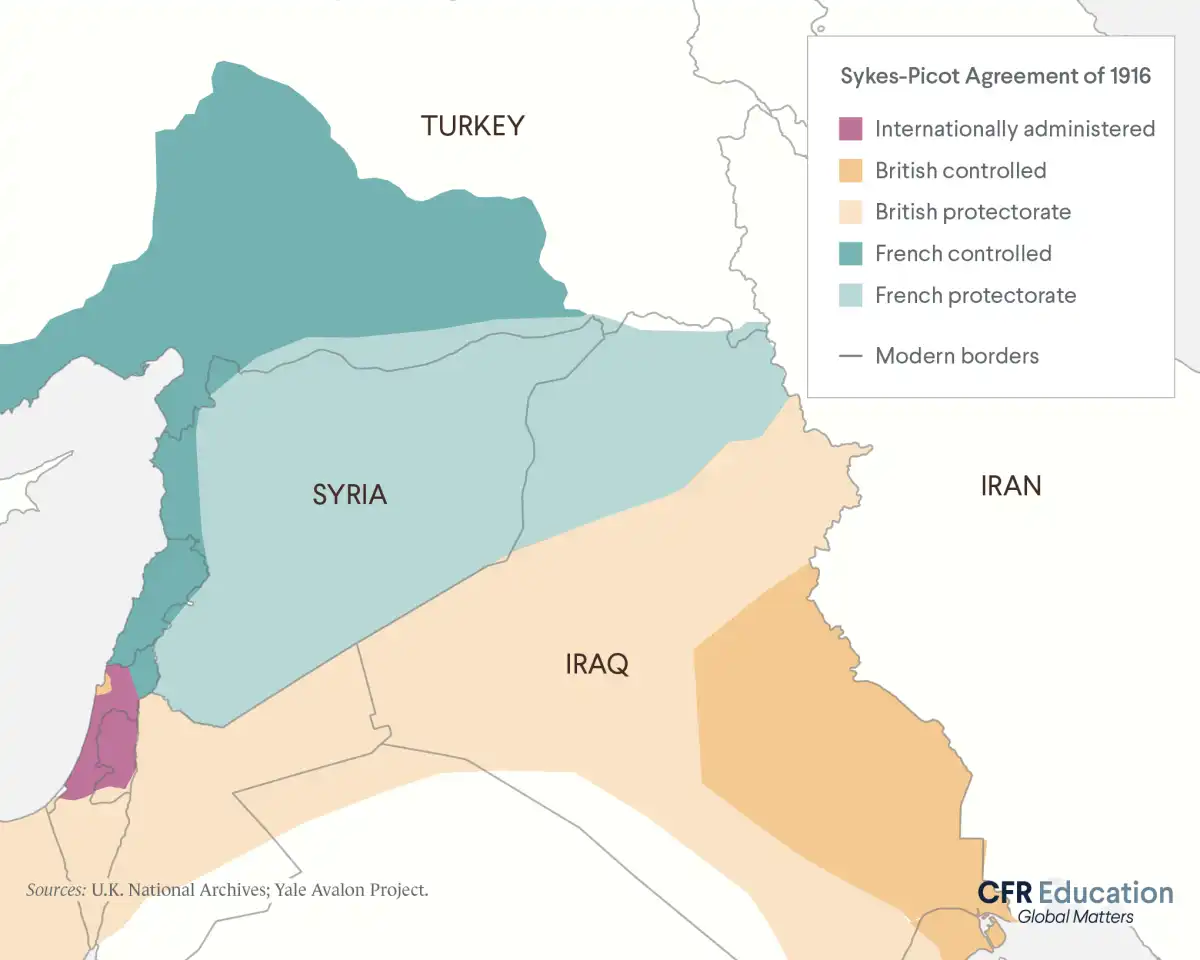
Up to World War I, the United States generally refrained from intervention in the Middle East. The region's modern borders began to form in the early 20th century following the collapse of the Ottoman Empire, which had controlled almost the entire Middle East and parts of North Africa for centuries.
The Egyptian-Israeli Peace Treaty
The Egyptian-Israeli peace treaty, signed on March 16, 1979, at the White House, was a significant event in the region. U.S. President Jimmy Carter shook hands with Egyptian President Anwar Sadat at the signing. This treaty was among the dramatic developments of the 1970s that reoriented regional politics and economics, as noted in the 1979 intelligence memorandum.
Key Facts
- The United States became heavily dependent on Middle East oil after 1973.
- U.S. influence in the Middle East declined, and anti-American sentiment increased by December 1979.
- Key developments in the 1970s included the 1973 Arab-Israeli war, rising oil prices, the Iranian revolution, and the Egyptian-Israeli peace treaty.
- The Egyptian-Israeli peace treaty was signed on March 16, 1979, by U.S. President Jimmy Carter and Egyptian President Anwar Sadat.
- U.S. contact with the Middle East began in the late 18th century with treaties to secure Mediterranean passage.
- American missionaries established educational institutions in the Middle East during the 19th century, including the Syrian Protestant College (American University of Beirut) and Robert College.