
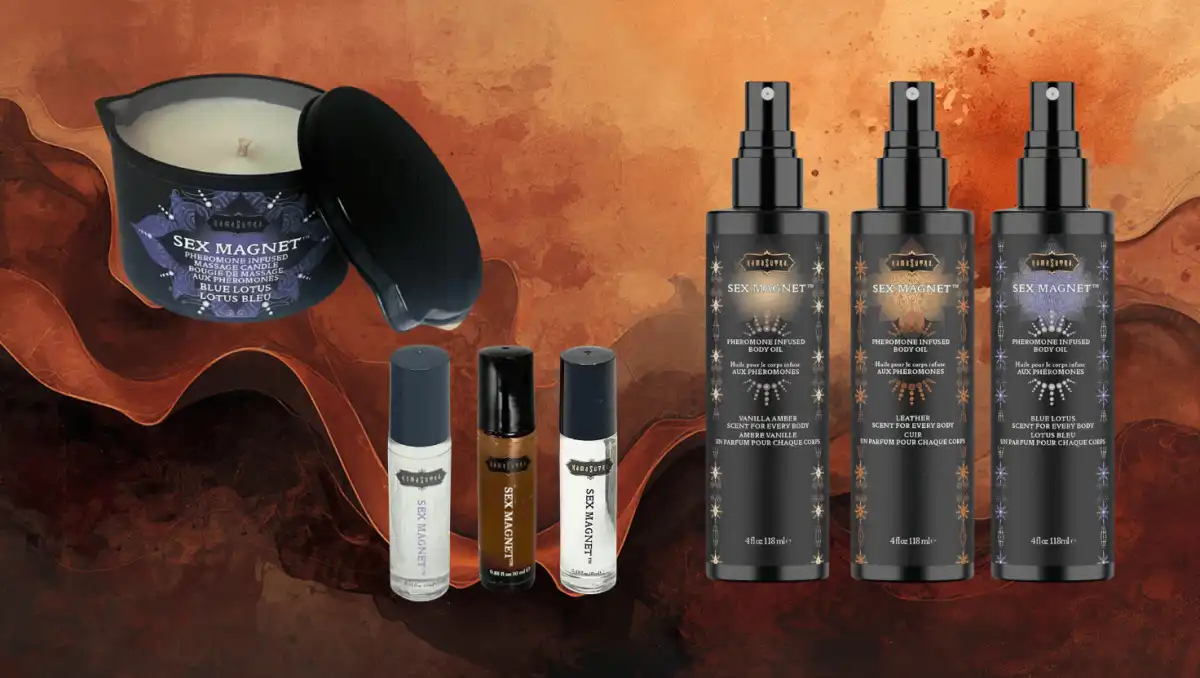
The adult industry's retail sector is re-evaluating the marketing and merchandising of pheromone products, moving towards a more nuanced approach that acknowledges scientific evidence while addressing customer motivations. This shift emphasizes honesty about product claims and positions pheromones within a broader self-care and sensual ritual category.
Rethinking Pheromone Product Positioning
Susan Bratton, an intimacy expert and longevity pioneer, suggests that retailers consider placing pheromone products alongside items such as massage oils, candles, and other products associated with sensual rituals and self-care. This approach contrasts with solely positioning them as tools for attracting another person. Bratton's perspective, published on November 6, 2026, highlights the importance of understanding customers' emotional motivations for purchasing these products.
Research published in the Archives of Sexual Behavior examined men's responses to underarm scent collected from women after exposure to sexually arousing versus neutral content. Across experiments, men rated the scent associated with sexual arousal as more attractive. Exposure was also linked to higher self-reported arousal and greater attention to women displaying sexual cues. However, this research focused on natural body odor associated with arousal and did not test bottled synthetic products marketed as "human pheromones."
Commercial pheromone products have faced scrutiny regarding marketing claims that may promise more certainty than the available evidence supports. Despite this, Bratton argues that this is not a reason to remove the category from shelves, but rather a reason to sell it honestly. Smell has direct connections to brain systems involved in emotion, memory, and behavior, which can explain why scent can produce immediate associations. The body produces odor-related chemical compounds through glands in areas such as the underarms and groin. Researchers have studied compounds like androstadienone and estratetraenol in connection with human chemosignaling, though the extent and meaning of these effects remain debated.
Commercial pheromone formulas may use synthetic compounds designed to mimic or supplement naturally occurring chemical signals. Whether a topical product can replicate the effects of a person’s natural scent during genuine arousal remains an open question. Retail staff should be comfortable acknowledging this uncertainty.
Customer Motivations and Sales Dialogue
Bratton's experience, spanning decades of discussions with women about desire, arousal, and libido, indicates that many women who buy pheromone products are not trying to control someone else’s behavior. Instead, they are interested in how the product makes them feel about themselves. One woman reported that wearing a pheromone product made her feel sexier before anyone else noticed the scent. Applying such a product can become a brief ritual before a date, dinner, or an ordinary evening, helping someone reconnect with a sense of desirability. The product may serve as a prompt, with confidence doing much of the work.
Men may approach the category from a different emotional angle. Some single customers may seek a confidence boost in social situations. Others, such as husbands or long-term partners, may hope for a simple way to bring more intention to a familiar relationship. One customer noted that applying a small amount before coming home from work led to his wife becoming more physically affectionate over time. This illustrates how a product can become part of a repeatable ritual that changes how someone shows up in a relationship, rather than proving the bottle caused the change.
Pheromone products are not substitutes for grooming, presence, communication, or genuine connection. They can, however, be framed as one element of a sensual routine that helps a customer feel more confident or intentional. Staff training should reflect this distinction. When asked if a product "really works," a recommended response is that scent can influence attraction, mood, and perception, while evidence for specific bottled pheromone formulas is mixed and individual responses vary. This approach respects customer intelligence and protects retailers from overselling the science.
Scientific Context and Marketing Claims
Pheromones are chemical signals released by animals to influence the behavior of others, often to attract mates. While pheromones are well-established in many animal species, no specific human sex pheromone has been conclusively identified. Researchers have studied compounds such as androstadienone, estratetraenol, androstenone, and androstenol in humans. However, findings remain inconsistent and highly dependent on study design, context, dose, and the individuals being tested.
Théo Belmas, a perfumer at Czech fragrance house Pigmentarium, notes that while some olfactive molecules in perfumery may have atomic structures close to pheromones, no real study has confirmed a pheromone-like power in these compounds. Some lab studies suggest certain compounds, like androstenone, may influence mood or arousal in controlled settings, but conclusive research proving that pheromones consistently attract people in real-world situations is lacking. The term "pheromone" in perfumery often refers to synthetic compounds that mimic naturally occurring molecules thought to influence attraction, including androstenone (described as musky, woody, slightly animalic) and androstadienone (powdery, musky).
The scientific answer regarding pheromone perfumes is less dramatic than common claims. While a perfume can make someone want to lean closer or make the wearer feel more attractive, it has not been demonstrated that a commercial "pheromone perfume" reliably switches on sexual attraction through a proven human pheromone mechanism. Attraction cannot be guaranteed by a fragrance ingredient, and specific sexual control claims remain unproven. Context, expectation, learned associations, and ordinary scent preference all play roles in how scents are perceived.
Key Facts
- Research on natural body odor associated with arousal shows men rated sexually aroused scent as more attractive.
- Commercial pheromone products use synthetic compounds, but their ability to replicate natural arousal effects is an open question.
- No specific human sex pheromone has been conclusively identified, and research findings on compounds like androstadienone and estratetraenol are inconsistent.
- Retailers are advised to position pheromone products near sensual self-care items like massage oils and candles.
- Customer motivations for purchasing pheromone products often include self-confidence and enhancing personal rituals, not solely attracting others.
- Honest sales dialogue acknowledges scientific uncertainties rather than making guaranteed claims about chemical effects on others.