The Free Speech Coalition (FSC) issued an advisory on September 30, 2026, informing members and stakeholders that Utah's excise tax on adult content sales will become effective on Thursday, October 1, 2026. This tax, established by SB73, applies to online adult businesses with sales in Utah.
Utah's Digital Content Excise Tax
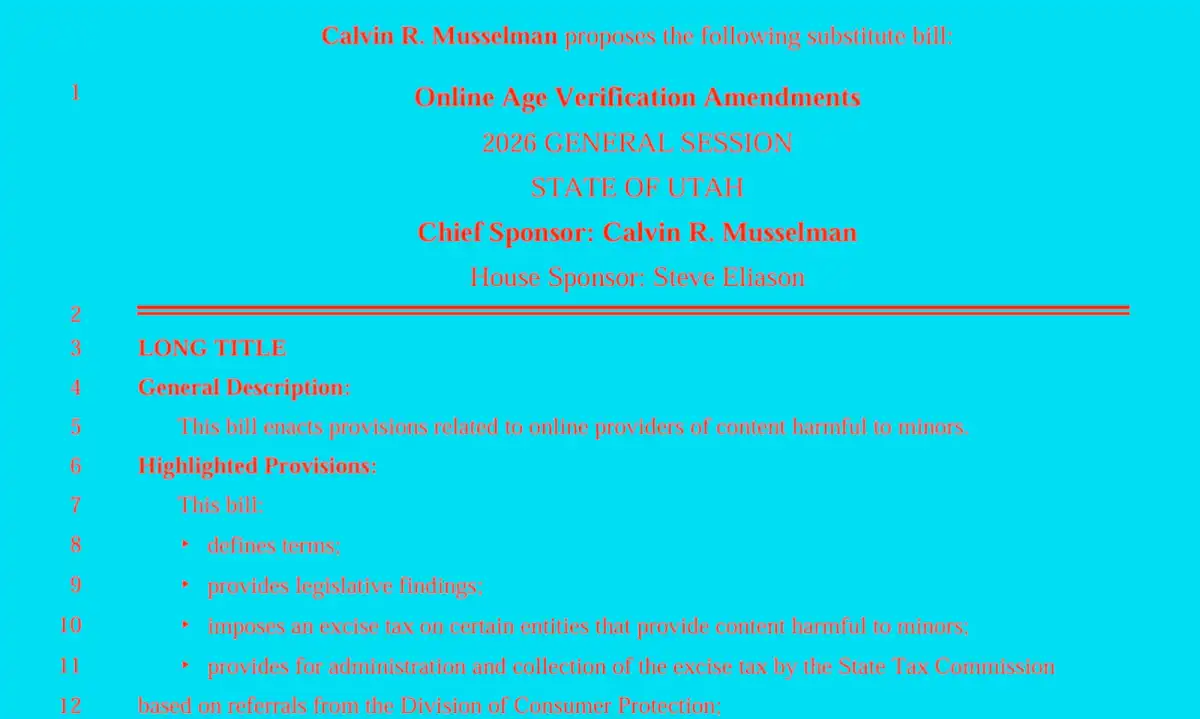
Utah Governor Spencer Cox signed legislation, SB 73, which imposes a 2 percent excise tax on gross receipts from selling, distributing, or offering subscriptions to digital content deemed harmful to minors. This law takes effect on October 1, 2026. The tax is administered, collected, and enforced by the Utah State Tax Commission.
The excise tax is calculated at 2 percent of the sales price of "covered transactions" made by "covered entities." A "covered entity" is defined as a commercial entity required to implement age verification systems under UCA §78B-3-1002 because it publishes or distributes digital content deemed harmful to minors. These businesses are also required to file a Utah Sales and Use Tax Return.
A "covered transaction" includes amounts paid to or charged by a covered entity for access to digital images, digital audio-visual works, digital audio works, digital books, or gaming services. This includes streaming or subscription access, regardless of the delivery method or access type. Unlike a sales tax, where the seller typically collects the tax from the customer, this excise tax is imposed directly on the business providing the covered digital content.
Industry Concerns and Compliance
Some members of the adult entertainment industry have expressed concerns that paying the excise tax could draw the attention of the state, potentially increasing the likelihood of enforcement against them through other sections of the law. Jeffrey Douglas, Free Speech Coalition Board Chair, recommended that adult businesses with sales in Utah consult with their attorneys to evaluate their liability.
Douglas stated that while a tax on speech is unconstitutional, adult businesses are liable unless the law is challenged and overturned. He also noted that potential penalties for noncompliance are substantial, and the willful refusal to pay the tax in Utah can result in significant fines and potential felony charges. Douglas advised that anyone considering noncompliance should speak with their counsel.
The statutes regarding the excise tax, including payment information and details on which platforms and content are covered, are available for reference.
Broader Context of Digital Taxation
The introduction of Utah's digital content excise tax reflects an evolving trend in state taxation of digital businesses. States are seeking new methods to generate revenue from the expanding digital economy. Historically, sales tax has been the primary tax applied to digital products and services. Utah's SB 73 specifically targets certain digital businesses with this new excise tax.
Utah's state sales tax rate is 4.850%, with reduced rates for sales of certain types of items. Local rates range from 1% to 7.5% and apply to use tax. The state has remote seller nexus rules, including affiliate nexus effective July 1, 2012, economic nexus effective January 1, 2019, and marketplace nexus effective October 1, 2019. Utah is a full member of the Streamlined Sales Tax Program and has 318 sales tax jurisdictions.
Key Facts
- Utah's porn excise tax, established by SB73, goes into effect on October 1, 2026.
- The tax imposes a 2% excise tax on gross receipts from selling, distributing, or offering subscriptions to digital content deemed harmful to minors.
- "Covered entities" are commercial entities required to implement age verification systems under UCA §78B-3-1002.
- "Covered transactions" include access to digital images, audio-visual works, audio works, digital books, or gaming services.
- The excise tax is imposed directly on the business providing the digital content, not collected from the customer like a sales tax.
- Noncompliance with the tax can result in significant fines and potential felony charges.