Utah's controversial excise tax on adult content sales is set to take effect on October 1, 2026. The Free Speech Coalition (FSC) has issued an advisory to its members and stakeholders regarding the implementation of this new tax.
Utah's Excise Tax on Adult Content
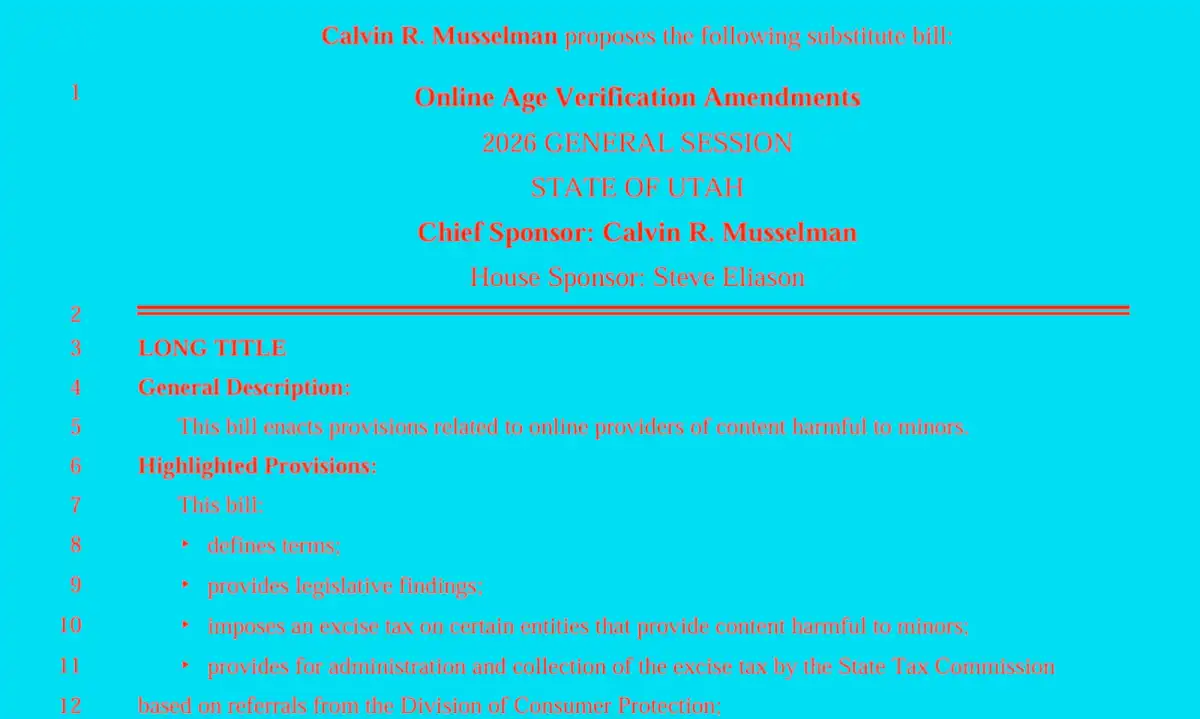
The excise tax, established by SB73, requires online adult businesses to pay a 2% excise tax on sales made within the state of Utah. This legislation, an update to the state’s existing age-verification law, was signed by Utah Governor Spencer Cox. The tax is administered, collected, and enforced by the Utah State Tax Commission.
The tax applies to "covered transactions" made by "covered entities." A "covered entity" is defined as a commercial entity required to implement age verification systems under UCA §78B-3-1002 because it publishes or distributes digital content deemed harmful to minors. These businesses are also required to file a Utah Sales and Use Tax Return.
"Covered transactions" include amounts paid to or charged by a covered entity for access to digital images, digital audio-visual works, digital audio works, digital books, or gaming services. This encompasses streaming or subscription access, regardless of the delivery method or access type. Unlike a sales tax, which is typically collected from the customer by the seller, this excise tax is imposed directly on the business providing the covered digital content.
The Free Speech Coalition (FSC) issued an advisory on September 30, 2026, informing members and stakeholders about the impending effective date. Jeffrey Douglas, Free Speech Coalition Board Chair, recommends that adult businesses with sales in Utah consult with their attorneys to evaluate their liability.
Douglas stated that while a tax on speech is unconstitutional, adult businesses are liable unless the law is challenged and overturned. He also noted that potential penalties for noncompliance are substantial, and willful refusal to pay the tax in Utah can result in significant fines and potential felony charges. Douglas advised that anyone considering noncompliance should speak with their counsel.
Age Verification and Enforcement
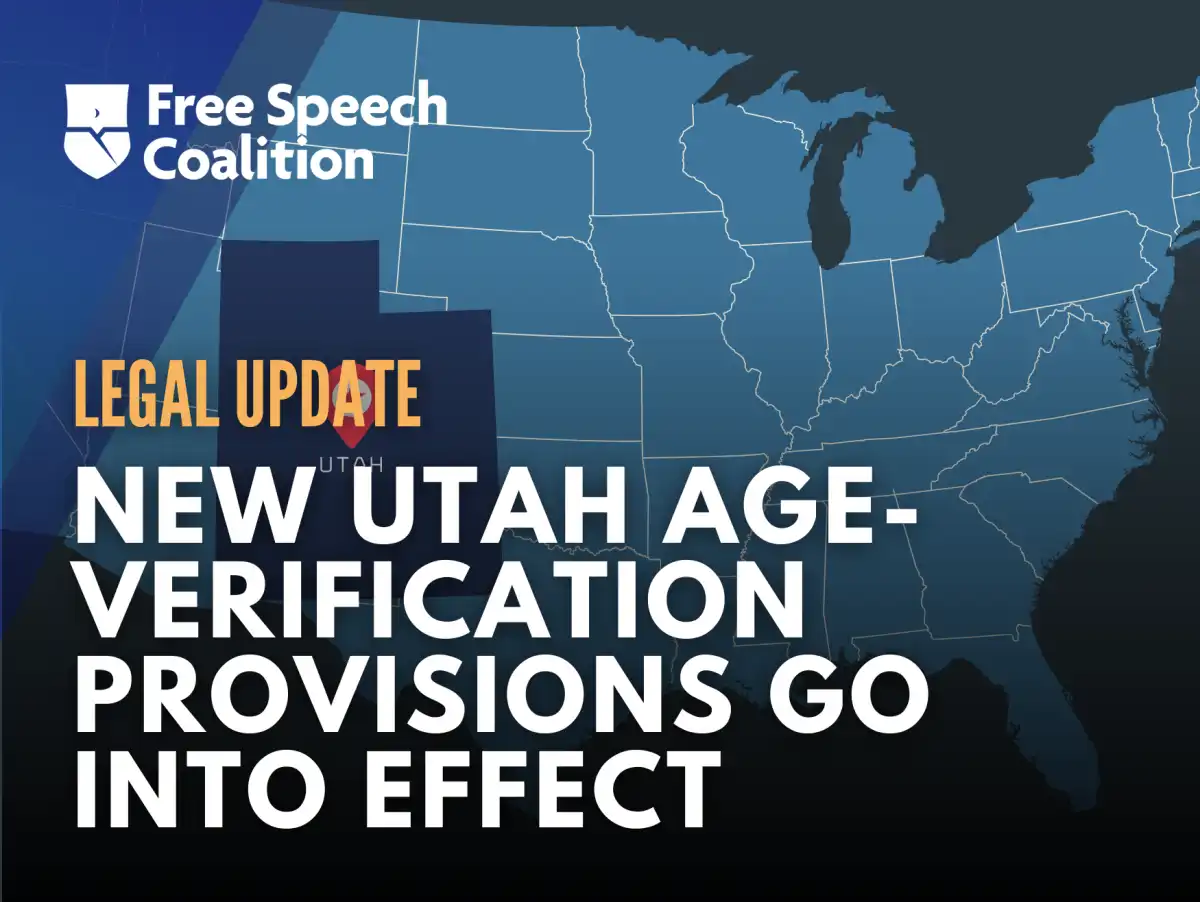
SB73 also includes other provisions related to age verification, some of which went into partial effect on May 6, 2026. These provisions give the Division of Consumer Protection the ability to enforce the age-verification mandate, ban platforms from encouraging the use of VPNs, and require platforms to age-verify any users physically located in Utah, regardless of their IP address.
This means that compliance strategies relying on IP addresses, such as geoblocking, may not be effective at mitigating liability. Platforms that currently age-verify visitors from Utah could still face issues if a Utahn uses a VPN to disguise their location or if their IP address belongs to a range associated with a neighboring state like Arizona or Nevada.
Alison Boden, Executive Director of Free Speech Coalition, stated that Utah’s new law makes compliance difficult. She noted that determining geolocation based on IP address is imperfect and that with SB73, Utah is effectively overriding the laws of other jurisdictions by requiring platforms to age-verify every visitor to their sites. Boden recommended that platforms discuss how to approach this situation with their attorneys.
Some members of the adult industry have expressed concern that payment of the excise tax could bring them to the attention of the state, potentially increasing the probability of enforcement against them via other sections of the law.
Industry Response and Legal Considerations
The statutes regarding the excise tax, including payment information and details on which platforms and content are covered, are available for reference. The FSC has provided information on SB73, including a link to the text of the legislation, on its Action Center.
The implementation of this excise tax follows other recent legal developments impacting the adult industry. On September 24, 2026, Aylo won a preliminary injunction against Utah AV Law's VPN rule. A federal court prevented the state of Utah from enforcing a legal provision that would make adult websites liable if minors in the state circumvent geolocation efforts to bypass age verification.
Separately, on September 23, 2026, U.K. media regulator Ofcom opened an investigation to determine whether Pornhub parent company Aylo’s use of device-based age verification complies with the U.K.’s Online Safety Act.
Key Facts
- Utah's excise tax on adult content sales goes into effect on October 1, 2026.
- The tax, established by SB73, requires online adult businesses to pay 2% on sales in Utah.
- The Free Speech Coalition (FSC) issued an advisory on September 30, 2026, urging compliance.
- Jeffrey Douglas, FSC Board Chair, recommends adult businesses consult attorneys due to potential penalties for noncompliance.
- SB73 also includes age-verification provisions, some effective May 6, 2026, which ban VPN encouragement and require age-verification regardless of IP address.
- The excise tax is imposed directly on the business, not collected from the customer.